


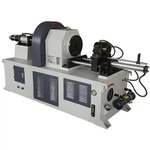


Pipe Bender Machine
Company Introduction
Jiangsu hefeng mechanical making co.,ltd. Established in 1985, jiangsu hefeng mechanical making co.,ltd. Is a professional manufacture of pipe processing machine with an area of 45,000 square meters.Our company obtains strong researching and developing capacity as well as the production and inspection capacity of high precision.
Why Choose Us
Our Product
Pipe bending machine, pipe-end forming machine, cutting machine and some other pipe processing machines.
Product Application
We provide unitized sets of equipments for processing pipes for automobile, physical gymnastic equipment, steel-pipe furniture, plumbing and bathing industries.
Our Certificate
We have passed the authentication of iso 9001:2015 quality management system and ce certificate.
Our Service
Our has set up a standardized before and after sale network and supply good and quick service to our customers.
Related Product

Semi Automatic Pipe Bending Machine
At the semi-automatic pipe bending machines of the series the bending function runs automatically while pipe feed and pipe rotation between two bends have to be carried out manually.

Semi automatic mandrel bender machines models will help you to have precision bend rotations on your 3d tube bend works. As a result, you can have easily precision exhaust, copper, stainless steel and metal pipe bend solutions on your tube bend works.

A pipe bending machine is a mechanical device designed to bend pipes or tubes into specific shapes or angles. By utilizing different bending techniques, these machines can create smooth and accurate bends in various pipe materials, such as steel, stainless steel, copper, and aluminum.

Hydraulic Pipe Bending Machine
A hydraulic pipe bender is a device that uses hydraulic pressure to bend various metal pipes to specific angles. Hydraulic pipe benders work the same way as hydraulic car jacks and can perform multiple bends on the same pipe.

There are various machines for bending copper pipes. These machines can be just a simple bending spring, in which case the bending operation is done by placing the spring inside the pipe and bending it by hand. Using a manual pipe bending machine, which is done by pressing the lever and bending the pipe around a die.

The pipe bending machine is a kind of equipment for cold bending processing of metal pipes and profiles. The bending process is a stretching process. During the bending process, no coolant is required.

Stainless Steel Pipe Bending Machine
A stainless steel pipe bending machine is a mechanical device designed to bend pipes or tubes into specific shapes or angles. By utilizing different bending techniques, these machines can create smooth and accurate bends in various pipe materials, such as steel, stainless steel, copper, and aluminum.

Full Automatic Pipe Bending Machine
A pipe bending machine is a mechanical device designed to bend pipes or tubes into specific shapes or angles. By utilizing different bending techniques, these machines can create smooth and accurate bends in various pipe materials, such as steel, stainless steel, copper, and aluminum.

Cnc stands for computer numerical control. A cnc pipe bender works with a computer to control the mechanical parts and hydraulic system. The machine guarantees consistent bending and precise dimensions. It also eliminates any confusion surrounding bending techniques, each and every time.
What is Pipe Bender Machine?
A pipe bending machine is a mechanical device designed to bend pipes or tubes into specific shapes or angles. By utilizing different bending techniques, these machines can create smooth and accurate bends in various pipe materials, such as steel, stainless steel, copper, and aluminum. The versatility of pipe bending machines allows for the creation of a wide range of pipe configurations, including curves, loops, spirals, and complex geometries.
Advantages of Pipe Bender Machine
Precision And Accuracy
Ensure precise and accurate bends in pipes, allowing for consistency in the final products. This precision is crucial in applications where accurate dimensions are required, such as in construction and manufacturing.
Versatility
These machines can handle pipes and tubes of various sizes, materials, and thicknesses. They can bend different types of metals, including steel, aluminium, and copper, as well as plastic and composite materials. This versatility enables their use in diverse industries.
Cost Efficiency
Reduce material wastage by making precise bends, minimizing scraps and reducing costs. They also enhance efficiency, allowing for faster production and lower labour costs, leading to overall cost savings.
High Production Speed
Automated pipe bending machines can produce a large volume of accurately bent pipes in a short amount of time. This high production speed is essential for meeting deadlines in manufacturing processes.
Types of Pipe Bender Machine
Manual pipe bending machines
Manual pipe bending machines are probably the oldest types of pipe benders, dating back to ancient times. These machines use manual force to bend pipes, making them an ideal solution for small-scale or diy projects. They feature a lever or handle that the operator pulls, forcing the pipe to bend around a stationary die set in the machine. Manual pipe bending machines are relatively cheap, portable, and easy to operate, making them ideal for home garages or construction sites.
Hydraulic pipe bending machines
Hydraulic pipe bending machines work by applying hydraulic pressure to the pipe to achieve optimal bending. They feature a hydraulic cylinder that pushes a series of rollers or mandrels against the pipe. The hydraulic pressure creates enough force to flex the pipe around the bender's die. Hydraulic pipe bending machines are fast, accurate, and efficient, making them ideal for large-scale industrial projects.
Electric pipe bending machines
Electric pipe bending machines use an electric motor to drive the bending mechanism. The operator adjusts the bending angle and radius by operating the electric control panel or foot pedal. These machines are relatively fast, accurate, and efficient, making them ideal for medium and large scale projects.
Mechanical pipe bending machines
Mechanical pipe bending machines use mechanical force to bend pipes. They feature gears, levers, and other mechanical components that work together to apply force to the pipe, forcing it to curve around a stationary die. These machines are ideal for projects that require precise and repeatable bending applications. Mechanical pipe bending machines are relatively fast and accurate, but they are not as fast as hydraulic pipe benders.
Double-headed pipe bending machines
Double-headed pipe bending machines are ideal for bending pipes with complex shapes and curves. They use two separate bending tools that work in tandem to bend the pipe in the right direction. The operator feeds the pipe between the tools, and the machine applies enough force to create the desired bend. Double-headed pipe bending machines are accurate, efficient, and ideal for mass production projects.
Working Principle of Pipe Bender Machine
Preparation
The operator selects the appropriate die or mandrel for the specific pipe size and bending angle. The machine, if hydraulic or electrically operated, is turned on and allowed to preheat.
Clamping The Pipe
The pipe to be bent is clamped into the machine's clamp.
Pipe Flattening
The machine applies pressure on the pipe, which flattens it slightly, affecting its diameter. This flattening creates a deformation zone, making it more susceptible to bending.
Bending
The machine exerts enough force on the pipe through its bending mechanism, causing it to curve around the die. The operator controls the bending angle and radius through the machine's control panel or foot pedal.
Release And Unclamp
Once the pipe has met the bend's requirements, the machine releases the pressure, and the clamp unclamps the pipe, allowing it to move out of the machine.
Application of Pipe Bender Machine
Oil And Gas Industry
The oil and gas industry relies on pipe bending machines for various applications, such as creating pipes that can curve around oil rigs or pipelines in various orientations. The pipes can have relatively steep inclines or curves, making the bending process crucial to project success.
Construction Industry
The construction industry uses pipe bending machines to bend pipes for construction purposes, such as creating rails, staircases, and handrails, most commonly used in commercial and residential buildings. The machines also create pipes for hvac systems, plumbing, and electrical systems.
Automotive Industry
The automotive industry uses pipe bending machines to create bends in pipes and tubing for various parts and applications. The machines create pipes for the exhaust system, fuel lines, and brakes, among others.
How to Choose Pipe Bender Machine
Before diving into the selection process, it's essential to have a basic understanding of the tube bending processes. There are three primary methods: Rotary draw bending, roll bending, and compression bending. The choice of the bending process depends on factors such as material, tube diameter, wall thickness, and the desired bend radius.
Rotary draw bending: Ideal for tight-radius bends, rotary draw bending involves a bending die that counteracts the tube's external force, producing precise and clean bends.
Roll bending: Suitable for larger radii, roll bending uses three adjustable rollers to bend the tube gradually. This method is commonly used for creating curves and spirals.
Compression bending: This process involves compressing the tube against a forming die, resulting in a bend. Compression bending is often used for larger-diameter tubes and is known for its efficiency in mass production.
The type of material being used and the specifications of the tube are critical considerations. Different materials, such as steel, aluminium, and copper, have varying levels of flexibility and strength.
Additionally, the tube's diameter and wall thickness play a role in determining the appropriate bending machine. Ensure that the machine you choose can handle the specific material and tube dimensions required for your project.
Manual machines: Suited for small-scale or prototype projects, manual machines require the operator to control the bending process manually. These machines are cost-effective but may not be practical for high-volume production.
Semi-automatic machines: Combining manual and automated features, semi-automatic machines provide a balance between precision and operator control. They are suitable for medium-scale production.
Fully automatic machines: Designed for high-volume production, fully automatic machines can perform multiple bends with minimal operator intervention. These machines are efficient but may be more expensive.
The availability and versatility of tooling options and accessories can significantly impact the machine's capabilities. Look for machines that offer a range of tooling options to accommodate different tube sizes and bend radii. Quick-change tooling systems can enhance efficiency by minimising setup time for different tube profiles.
Precision is crucial in tube bending, especially for applications where accuracy is paramount. Consider machines that offer precise control over the bending process, ensuring consistent results across batches. Computer numerical control (cnc) capabilities can enhance accuracy by allowing for programmable and repeatable bending sequences.
A reliable tube bending machine should be easy to maintain and service. Look for machines with accessible components, clear documentation, and a responsive customer support system. Regular maintenance is essential to ensure the longevity and optimal performance of the machine.
While it's tempting to opt for the most advanced and feature-rich machine, it's crucial to align your choice with your budget constraints. Evaluate the cost of the machine, including any additional tooling and accessories, and consider the long-term return on investment based on your production needs.
The use of the tube bending machine is very simple, and some problems should be paid attention to when using it. For example, the safety of electricity should be paid attention to, because electricity is not a trivial matter, and if it is used improperly, there will be serious consequences.
Although the circuit of the hydraulic tube bending machine is insulated, there will always be a line interface. You must not touch it. Of course, people are not allowed to touch it. Only professional personnel can touch it under maintenance or other conditions.
The voltage provided to the tube bending machine must be provided according to the voltage used by the tube bending machine. Don't overload the supply voltage, which is very dangerous and may cause damage to the machine, shutdown, or even leakage.
The machine must be completely isolated from the power supply before any electrical box is opened. And the power supply should be turned off.
How to Maintain Pipe Bender Machine
Replacement Of Circulating Water And Cleaning Of Water Tank Of Pipe Bender
Make sure that the laser tube is full of circulating water before the pipe bender works. The quality and temperature of the circulating water will directly affect the service life of the laser tube. Therefore, it is necessary to change the circulating water and clean the water tank regularly. This is best done once a week.
Lens Cleaning
There will be some reflectors and focusing mirrors on the pipe bender. The laser is reflected and focused through these lenses and then emitted from the laser hair. The lens is easy to be stained with dust or other pollutants, causing laser loss or lens damage. So clean the lenses every day.
Fan Cleaning
The use of the fan in the pipe bender for a long time will accumulate a lot of solid dust in the fan, make the fan generate a lot of noise, and is not conducive to exhaust and deodorization. When the suction of the fan is insufficient and the exhaust is not smooth, the fan should be cleaned.
Guide Rail Cleaning
As one of the core parts of the equipment, guide rail and linear axis play a guiding and supporting role. In order to ensure the high machining accuracy of the pipe bender, its guide rail and straight line are required to have high guiding accuracy and good movement stability. During the operation of the equipment, a large number of corrosive dust and smoke will be produced during the processing of the processed parts. Based on the large amount of smoke and dust deposited on the surface of the guide rail and the linear axis for a long time, it has a great impact on the processing accuracy of the equipment, and will form corrosion points on the surface of the linear axis of the guide rail and shorten the service life of the equipment. So clean the guide rail of the pipe bender every half month. Turn off the pipe bender before cleaning.
Inspection Of Light Path
The optical path system of the pipe bender is jointly completed by the reflection of the reflector and the focus of the focusing mirror. In the optical path, there is no deviation problem of the focusing mirror, but the three reflectors are fixed by the mechanical part, and the possibility of deviation is relatively large. Although in general, there is no deviation, it is recommended that the user check whether the optical path is normal before each work.
Fastening Of Screws And Couplings
After the motion system works for a period of time, the screws and couplings at the motion joints will be loose, which will affect the stability of the mechanical movement. Therefore, during the operation of the pipe bender, it is necessary to observe whether there is any abnormal noise or abnormal phenomenon in the transmission parts, and if any problem is found, it is necessary to timely strengthen and maintain it. At the same time, the pipe bender should use tools to firm screws one by one after a period of time. The first firmness shall be about one month after the equipment is used.
FAQ
Q: What is a pipe bending machine?
Q: What is a pipe bender used for?
Q: What is a bender used for?
Q: What is the principle of pipe bending?
Q: What are the advantages of pipe bending?
Q: What is manual pipe bending machine?
Q: What is the difference between a pipe bender and a tube bender?
Q: How is pipe bending done?
Q: What is the use of pipe bender?
Q: What is the objective of pipe bending machine?
Q: What is the best type of pipe bender?
Q: What material is used for pipe bending?
Q: What are the benefits of pipe bending machine?
Q: Why use a pipe bender?
Q: Who uses a pipe bender?
Q: What is the working principle of pipe bending machine?
Q: What are the objectives of pipe bending machine?
Q: Can you bend aluminium tube in a pipe bender?
Q: What are the benefits of pipe bending machine?
Q: How to bend a pipe with a bender?
Hot Tags: pipe bender machine, China pipe bender machine manufacturers, suppliers, factory, Hydraulic Pipe Shrinking Machine, Automatic Pipe Bending Machine, Full Automatic Pipe Bending Machine 3A1S, Fully Automatic Pipe Bending Machine, Stainless Steel Pipe Bending Machine, Copper Pipe Bending Machine
You Might Also Like


Send Inquiry