

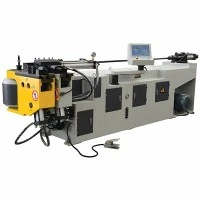

Fully Automatic Pipe Bending Machine
What is Fully Automatic Pipe Bending Machine?
An fully automatic pipe bending machine is a specialized industrial machinery used to bend pipes or tubes into specific shapes or angles automatically, without the need for manual intervention. These machines utilize computer numerical control (cnc) technology to precisely control the bending process, ensuring accuracy and consistency in the bent pipe or tube.
Advantages of Fully Automatic Pipe Bending Machine
Precision And Accuracy
Ensure precise and accurate bends in pipes, allowing for consistency in the final products. This precision is crucial in applications where accurate dimensions are required, such as in construction and manufacturing.
Versatility
These machines can handle pipes and tubes of various sizes, materials, and thicknesses. They can bend different types of metals, including steel, aluminium, and copper, as well as plastic and composite materials. This versatility enables their use in diverse industries.
Cost Efficiency
Reduce material wastage by making precise bends, minimizing scraps and reducing costs. They also enhance efficiency, allowing for faster production and lower labour costs, leading to overall cost savings.
High Production Speed
Automated pipe bending machines can produce a large volume of accurately bent pipes in a short amount of time. This high production speed is essential for meeting deadlines in manufacturing processes.


why choose us
Our product
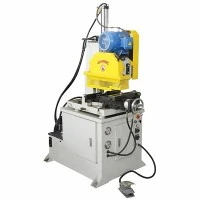
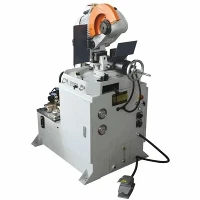
Pipe bending machine, pipe-end forming machine, cutting machine and some other pipe processing machines.
Product application
We provide unitized sets of equipments for processing pipes for automobile, physical gymnastic equipment, steel-pipe furniture, plumbing and bathing industries.
Our certificate
We have passed the authentication of iso 9001:2015 quality management system and ce certificate.
Our service
Our has set up a standardized before and after sale network and supply good and quick service to our customers.
Manual Pipe Bender
This is a manual bending product, strictly speaking, it can only be regarded as a tool.
Ordinary Electric Pipe Bender
This is an upgraded product based on the manual pipe bender, instead of manual bending, it can be regarded as the first generation of pipe bender.
Cnc Electric Pipe Bender
Based on an upgraded product of the electric pipe bender, the angle control part is upgraded, the angle adjustment is more convenient, and the angle error value is small, which virtually saves a lot of tedious time, saves labor costs, and the price is moderate, and the price is extremely high.
Semi Automatic Nc Tube Bending Machine
The semi-automatic hydraulic pipe bender breaks down the bending action, and uses hydraulic pressure to drive the clamping and retreating, the bending retreat, auxiliary advance and spoke retreat, core advance and retreat and other actions. The hydraulic pipe bender is an ordinary plane-wound automatic pipe bender. The action of the pipe is automatic when the pipe is produced, but its feeding, rotating, etc. Are all done manually by the fixed-length machine angle positioning ruler.
Cnc Hydraulic Mandrel Pipe Bending Machine
The machine adopts hydraulic drive and digital angle adjustment. Its functionality is similar to that of a cnc electric pipe bender, but it has an advantage in that it can process thin-walled stainless steel pipes and it improve the bending efficiency.
Fully Automatic Cnc Tube Bender
The most advanced equipment in the pipe bending machine, which can automatically feed the pipe, automatically rotate the pipe, and automatically bend the shape.
How to Use Fully Automatic Pipe Bending Machine
The fully automatic pipe bending machine bender is relatively compact. From the bed to the head, many parts are used with high reliability parts. Fully automatic pipe bending machine is driven by hydraulic pressure, controlled by microcomputer, operation display system is touch type, the operator can quickly make the equipment to execute the required command, the preparation of ideal equipment. In addition, its operation mode is also more flexible, automatic operation, manual operation, semi-automatic operation can be.
Check all parts before starting
Automatic cnc pipe bender belongs to precision equipment, any link is not careless, so in order to ensure that the equipment can be used normally for a long time, before formal use to develop the habit of checking parts, mainly to see whether the lines can operate normally.
No load operation
Under normal circumstances, the automatic numerical control pipe bender should be run without load before running, so as to ensure less error in cutting work.


Touch screen input parameter operation
When using the automatic cnc pipe bender, input the corresponding bending angle through the touch screen and then perform the operation, which can efficiently and accurately prepare the multi-angle pipe bender.
Cut off the power in time
At the end of use, but also timely cut off the power supply, do a good job of cleaning and maintenance.
Precautions of Fully Automatic Pipe Bending Machine
Especially when the fully fully automatic pipe bending machine is set in full automatic mode, it will operate automatically, and it is easy to have an accident if someone is close to it.
The adjustment of the fully fully automatic pipe bending machine should avoid two people operating separately in the machine tool and the touch screen at the same time.
When cleaning the fully automatic pipe bending machine, do not only clean the oil tank but also clean the oil inlet filter.
All parts of the fully fully automatic pipe bending machine should be kept tight to achieve the final cutting effect, so it is necessary to regularly maintain and check the tightness of each part.
Aerospace Industry
Aerospace industry uses a variety of profile bending machines, such as the cnc bender machine, to produce products such as hydraulic lines, exhaust systems, engine lines, seat frames and fuel lines. One of the most difficult challenges for the aerospace industry is to create durable and robust bends with steel pipe bender, in order to meet industry standards.
Automotive Industry
The automotive sector heavily relies on mandrel bending machines to minimize thin wall tubing’s ovality when it’s bent. The present pipe bending machines can help eliminate wrinkles on the inside radius of the bends too.
Automotive precision bending requires extremely high precision and repeatability to meet the mass demands of automobile manufacturers. Automobile bending demand is also constantly changing. Tube bending machines are used for manufacturing automotive exhaust systems, brake and fuel lines, seat frames, structural components and cooling systems as a result.
Heavy Truck Industry
In the heavy-duty truck industry, small and precise radius bending is often performed on difficult-to-bend tubing and pipe materials with 409 or 304 stainless steel. These materials can only be bent by high quality pipe benders, because they require large pipes of high strength. Our blma pipe benders and profile bending machines are used in the manufacture of fuel lines, engine pipes, many structural components and other custom fabrication for heavy trucks, which satisfy plenty of customer’ needs as much as possibly.
Ship-building Industry
From small vessels to commercial ships, the pipe bending processing technique is often utilized to create hydraulic lines, exhaust systems, fuel lines, and water lines.
Working Processes of Fully Automatic Pipe Bending Machine
Pipe bending, or tube bending, is one of the basic machining processes. By definition, pipe bending is considered any metal forming process used to form pipes or tubes permanently. This machining procedure can be a form-bound or free-form-bending process.
Pipe benders can be manual, hydraulically assisted, hydraulically driven, pneumatic, or electric servo motor operated. The tube bending process includes pressure bending, rotary stretching bending, rolling bending and induction bending.
The bending process begins with loading a pipe or a tube into the machine, and clamping it into place where among two dies, the clamping die and the bending die. Two other dies loosely hold the pipe itself, which are the pressure die and the wiper die.
The bending process involves using mechanical forces to push the material tube or tubing against the mold, forcing the tubing or tubing to adjust to the shape of the mold. Normally, the tube remains in place as its end rotates and rolls around the die. Different forms of process involve pushing stock pipe through rollers, and bending it into simple curves. For multi-tube bending processes, the mandrel is placed inside the tube to prevent collapse. The pipe is held in tension by a scraper to prevent any damage during the stress process. Wiper molds are usually made of softer materials, such as aluminum or brass to avoid damaging or scratching the bent material.
How to Choose Fully Automatic Pipe Bending Machine
Choose The Machine Based On Price Rather Than Type
Budget, while important, is only one of many important factors when choosing a fully automatic pipe bending machine. When price is allowed to drive the decision-making process, the result is often a low-cost, under-powered machine that turns into a pit due to customer churn and lack of work. The solution is to firstly figure out the size and shape of the part that needs to be bent. And, the budget for the machine needed is needed to be calculated afterwards.
Purchase The Machine To Bend At Full Load
The best suggestion for purchasing a fully automatic pipe bending machine is to enlarge a model, as the differences between different materials are needed to be taken into account. The tolerances between different grades of steel are very different as well. Therefore, to invest in a machine requires some leeway because a fully automatic pipe bending machine is rarely forced to work at full capacity.
Purchase The Fully-manual Machine To Save Money
To purchase a manual fully automatic pipe bending machine inevitably incurs additional costs. As the time takes to adjust a block for bending angle, length, and rotational positioning, it can quickly increase. Machines that use technology automate much of the process, such as nc or cnc pipe bending machine thereby saving valuable time.
Purchase The Machine Without Much Training
Bending pipes requires an in-depth understanding of the machine. Therefore, later machine training becomes crucial. In addition, the training enables the operator to gain an in-depth understanding of the best performance of the pipe bender. Working with companies that provide professional operator training and support means that productivity and efficiency can be optimized.
Important Technical Features of Fully Automatic Pipe Bending Machine
Tube Regulation
When designing and arranging pipes, avoid excessive arcs, arbitrary curves, compound bends, and arcs greater than 180°. The excessively large arc not only makes the mold bulky, but also is limited by the size of the machine tool; the design of arbitrary curves and compound bending is very unreasonable, which greatly hinders mechanization and automated production, and makes it difficult for operators to get rid of heavy manual labor. Moreover, the arc greater than 180° makes the bending machine unable to unload the mold.
Bending Radius Standardization
When you use a single-layer mold pipe bender, the bending radius should be as much as possible to achieve "one pipe, one mold" and "multiple pipes, one mold". Regarding a tube, no matter how many bends and the bending angle, there can only be one bending radius, because the module is not replaced during the bending process, this is "one tube, one mold". "multi-tubes and one mold" means that the same bending radius should be used as much as possible for tubes of the same diameter, that is, the same set of modules are used to bend different shapes of tubes, which will help reduce the number of modules.
Appropriate Bending Radius Value
The bending radius of the catheter determines the resistance of the catheter during bending. Generally speaking, a large pipe diameter and a small bending radius are prone to internal wrinkles and slippage during bending, and the bending quality is difficult to guarantee. Therefore, it is most appropriate to choose the central line radius value of the pipe bending die to be 2 or 3 times the pipe diameter.
Moderate Bending Speed
The main influence of the bending forming speed on the forming quality is: Too fast speed will easily cause the flattening of the bent part of the catheter, and the roundness will not meet the requirements, causing the catheter to tear or break. If the speed is too slow, it is easy to cause wrinkling of the catheter and slippage of the compression block, and a pipe with a large diameter is likely to cause the bending of the catheter to sink. For a large number of tests on these two cncs, it is appropriate to determine the bending speed of the catheter to be 20%-40% of the maximum bending speed of the machine.
Suitable Mandrel And Its Location
The core rod mainly plays the role of supporting the inner wall of the bending radius of the catheter to prevent its deformation during the bending process. There are many types of core rods, such as cylindrical core rods, universal single, double, triple, and four ball head core rods, directional single and multiple ball head core rods, etc. In addition, the position of the mandrel also has a certain influence on the bending of the catheter. Theoretically, its tangent line should be flush with the tangent line of the pipe bending die, but a large number of experiments have proved that it is better to be 1~2mm in advance, and the quality of the pipe bending is ideal at this time.
FAQ
Q: What is a pipe bending machine?
Q: What are the four types of pipe bender?
Q: What is the main purpose of pipe bending?
Q: What is the difference between pipe bending and tube bending?
Q: What is the cheapest pipe bending method?
Q: How do you calculate pipe bending?
Q: What tool is used to bend pipes?
Q: What material is used for pipe bending?
Q: What is the best type of pipe bender?
Q: What is the difference between a pipe bender and a tubing bender?
Q: What is a pipe bending machine called?
Q: What is the working principle of pipe bending machine?
Q: How does pipe bending work?
Q: What is the distance between bends in pipe bending?
Q: What is a pipe bender used for?
Q: What is the principle of pipe bending?
Q: What are the four types of pipe bending?
Q: What are the standards for pipe bending?
Q: Who uses a pipe bender?
Q: What is the minimum wall thickness for pipe bending?