

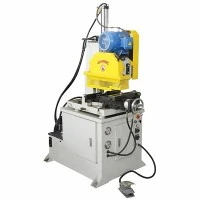

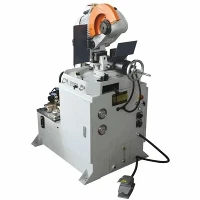


Hydraulic Pipe Bending Machine
Company Introduction
Jiangsu hefeng mechanical making co.,ltd. Established in 1985, jiangsu hefeng mechanical making co.,ltd. Is a professional manufacture of pipe processing machine with an area of 45,000 square meters.Our company obtains strong researching and developing capacity as well as the production and inspection capacity of high precision.
Why Choose Us
Our Product
Pipe bending machine, pipe-end forming machine, cutting machine and some other pipe processing machines.
Product Application
We provide unitized sets of equipments for processing pipes for automobile, physical gymnastic equipment, steel-pipe furniture, plumbing and bathing industries.
Our Certificate
We have passed the authentication of iso 9001:2015 quality management system and ce certificate.
Our Service
Our has set up a standardized before and after sale network and supply good and quick service to our customers.
Related Product

Semi Automatic Pipe Bending Machine
At the semi-automatic pipe bending machines of the series the bending function runs automatically while pipe feed and pipe rotation between two bends have to be carried out manually.

Semi automatic mandrel bender machines models will help you to have precision bend rotations on your 3d tube bend works. As a result, you can have easily precision exhaust, copper, stainless steel and metal pipe bend solutions on your tube bend works.

A pipe bending machine is a mechanical device designed to bend pipes or tubes into specific shapes or angles. By utilizing different bending techniques, these machines can create smooth and accurate bends in various pipe materials, such as steel, stainless steel, copper, and aluminum.

Hydraulic Pipe Bending Machine
A hydraulic pipe bender is a device that uses hydraulic pressure to bend various metal pipes to specific angles. Hydraulic pipe benders work the same way as hydraulic car jacks and can perform multiple bends on the same pipe.

There are various machines for bending copper pipes. These machines can be just a simple bending spring, in which case the bending operation is done by placing the spring inside the pipe and bending it by hand. Using a manual pipe bending machine, which is done by pressing the lever and bending the pipe around a die.

The pipe bending machine is a kind of equipment for cold bending processing of metal pipes and profiles. The bending process is a stretching process. During the bending process, no coolant is required.

Stainless Steel Pipe Bending Machine
A stainless steel pipe bending machine is a mechanical device designed to bend pipes or tubes into specific shapes or angles. By utilizing different bending techniques, these machines can create smooth and accurate bends in various pipe materials, such as steel, stainless steel, copper, and aluminum.

A pipe bending machine is a mechanical device designed to bend pipes or tubes into specific shapes or angles. By utilizing different bending techniques, these machines can create smooth and accurate bends in various pipe materials, such as steel, stainless steel, copper, and aluminum.

Cnc stands for computer numerical control. A cnc pipe bender works with a computer to control the mechanical parts and hydraulic system. The machine guarantees consistent bending and precise dimensions. It also eliminates any confusion surrounding bending techniques, each and every time.
What is Hydraulic Pipe Bending Machine?
A hydraulic pipe bender is a device that uses hydraulic pressure to bend various metal pipes to specific angles. Hydraulic pipe benders work the same way as hydraulic car jacks and can perform multiple bends on the same pipe. Although they aren't as effective as electric pipe benders, making bends using hydraulic pipe benders takes less time and effort than manual benders.
Advantages of Hydraulic Pipe Bending Machine
Precision And Consistency
Hydraulic pipe benders can bend metal with great precision and consistency, which is essential for many applications that require precise angles.
High Power
Hydraulic pipe benders are powerful machines that can bend large and thick metal pipes and tubes with ease. They can bend pipes and tubes with a large diameter and thickness, which would be difficult or impossible to bend by hand.
Versatility
Hydraulic pipe benders are versatile machines that can bend different types of metal, including steel, stainless steel, copper, and aluminum also can bend different shapes, such as round, square and rectangular.
Efficiency
Using a hydraulic pipe bender can greatly increase efficiency and productivity in industrial and construction projects. They can bend pipes quickly and accurately, which can save time and labor costs.
Types of Hydraulic Pipe Bending Machine
01
Manual Hydraulic Pipe Benders
These benders require manual operation & are commonly used for lighter-duty applications. They are portable and suitable for on-site bending tasks.
02
Electric Hydraulic Pipe Benders
Electrically powered pipe benders are more robust and offer higher bending capacities. They are typically used in workshops or industrial settings where power outlets are available.
03
Hydraulic-powered Pipe Benders
These benders are driven by a dedicated hydraulic power unit. They offer the highest bending capacity and are ideal for heavy-duty industrial applications.
Choose The Appropriate Die
Select the die that corresponds to the size and shape of the pipe you will be bending. The die is the part of the bender that comes into contact with the pipe and shapes it during the bending process.
Position The Pipe
Place the pipe in the bender and position it in the die. Make sure that the pipe is aligned correctly and that the die is in the correct position.
Set The Bend Angle
Use the bender's control panel to set the desired angle of the bend.
Secure The Pipe
Secure the pipe in the bender using the clamping mechanism. This will keep the pipe in place during the bending process.
Activate The Bender
Use the control panel to activate the bender. The hydraulic cylinder will apply pressure to the pipe, bending it to the desired angle.
Check The Bend
After the bend is complete, remove the pipe from the bender and inspect it. Make sure that the bend is at the correct angle and that the pipe is not damaged.
Repeat The Process
Repeat the process for any additional bends that are required.
It's important to be aware that hydraulic pipe benders can be dangerous if not used properly, always wear appropriate safety gear when working with it, and follow the manufacturer's instructions for operation, maintenance, and safety. It's also important to make sure that you use the correct die for the pipe size you are working with, and to set the correct angle for the bend to avoid overbending or underbending the pipe.
How to Choose Hydraulic Pipe Bending Machine
Capacity And Size
Determine the size and capacity of the pipes you'll be working with. Hydraulic pipe benders come in various sizes to accommodate different pipe diameters and thicknesses.
Bending Radius And Angle
Consider the bending radius and angle required for your applications. Different hydraulic pipe benders may have varying capabilities in terms of bending radius and angle.
Bending Speed
Evaluate the bending speed of the machine. Faster bending speeds can contribute to higher efficiency in production processes.
Accuracy And Precision
Look for hydraulic pipe benders that offer high accuracy and precision in bending. This is crucial, especially for applications where precise angles and dimensions are critical.
Tooling Options
Check the availability of a variety of tooling options. Having a range of dies and accessories allows you to handle diverse pipe bending requirements.
Ease Of Use
Opt for a hydraulic pipe bender that is user-friendly and easy to operate. Intuitive controls, digital displays, and features like automatic bending contribute to ease of use.
Durability And Construction
Assess the build quality and durability of the machine. Look for models made from robust materials that can withstand the rigors of continuous use in industrial settings.
Power Source
Determine whether you need an electric or hydraulic-powered machine. Consider the availability of power sources in your workspace.
Footprint And Portability
Consider the available space in your workshop and whether you need a stationary or portable hydraulic pipe bender.
Brand Reputation And Support
Choose a reputable brand with a history of delivering reliable machinery. Check for after-sales support, warranty, and availability of spare parts.
Safety Features
Prioritize safety features such as emergency stop buttons, safety guards, and automatic shut-off systems to ensure a secure working environment.
Budget Consideration
Establish a budget for your hydraulic pipe bender. Compare different models within your budget range while ensuring they meet your specific requirements.
By carefully evaluating these factors, you can select a hydraulic pipe bender that aligns with your operational needs, enhances productivity, and provides long-term reliability. Hydraulic pipe benders in play a crucial role in various industries, offering efficient and precise bending solutions for pipes of different sizes and materials. These machines utilize hydraulic power to create accurate bends in pipes, tubes, and other cylindrical materials.
Application of Hydraulic Pipe Bending Machine
Metal Fabrication
Hydraulic pipe benders are extensively used in metal fabrication shops to create bends in pipes for structures, frames, and components.
Construction
In the construction industry, these machines are employed for bending pipes to fit specific architectural designs and structural requirements.
Automotive Manufacturing
Hydraulic pipe bending machines play a crucial role in the automotive industry, used for shaping pipes in the production of exhaust systems, chassis, and other components.
Aerospace Industry
These machines are utilized in the aerospace sector for bending tubes that are integral to various aircraft components and systems.
Shipbuilding
Hydraulic pipe benders are used in shipyards to shape pipes and tubes for constructing different sections of ships and marine structures.
Oil And Gas
In the oil and gas industry, hydraulic pipe bending machines assist in creating bends in pipes for pipelines, drilling rigs, and other infrastructure.
Plumbing Installations
Plumbers use hydraulic pipe benders to shape pipes during installations, making it easier to navigate through complex plumbing systems.
Manufacturing Of Furniture
Furniture manufacturers use hydraulic pipe bending machines for creating curved or bent metal components in the production of chairs, tables, and other furniture pieces.
Hvac Systems
Hydraulic pipe benders are employed in the manufacturing of heating, ventilation, and air conditioning (hvac) systems for bending pipes to specific configurations.
Energy Sector
In power plants and other energy-related applications, hydraulic pipe bending machines are used for shaping pipes used in the construction of energy infrastructure.
What are the Precautions for Using a Hydraulic Pipe Bender
Check Pressure Values
When starting the bender's oil pump, check the bender's system pressure level. Either too high or too low a pressure is not a good thing. Excessive pressure can lead to damage to the bender's hydraulic components and can also consume too much power.
Adding Lubricant
The correct choice of reasonable lubricating oil can improve the physical properties of the hydraulic pipe bender and enhance its efficiency. Check the aging and looseness of the bender's various institutional components before using the bender, and whether it is important to add lubricant.
Responding To Special Situations
When using the equipment, the bend can be directly equipped in the pipe path according to the coupling method, in accordance with the orientation of the use of the equipment. For the inside of the arc, wrinkles should be taken according to the wrinkled part of the corresponding measures. If the front cutting point wrinkles should be adjusted mandrel position to achieve reasonable support for the pipe when bending.
The hydraulic pipe bender is simple to operate, but safety issues should not be ignored. Our hydraulic pipe bender takes intelligent system control, so users can be the first to check for hidden dangers via the screen. It is worth noting that the pressure components are easy to achieve serialization, standardisation and generalization, which makes it easy to maintain and promote their use, and it does not have high operating costs.
How to Maintain the Hydraulic Pipe Bender and How to Choose Lubricating Oil
We must choose a reasonable place for storage and use. The single head of the tube bender is made of metal. After sun and rain, acid rain corrosion and air oxidation will damage the machine. Therefore, we must pay attention to use in covered places, and avoid direct sunlight when not in use.
Add oil usually is also an important method of our maintenance. Especially the single-head hydraulic pipe bender blade. We use the single-head hydraulic pipe bender mainly rely on the cutting part of the blade, once the blade has any wear, it will affect the cutting effect, so we must pay special attention to it. Adding oil to the blade from time to time can effectively prevent the blade from wearing too much, and it will not get stuck due to too dry. Also, before starting the machine, it is best to idle for a while. At this time, we should pay attention to listening to the sound with our ears. , listen to it for abnormal sounds, check if there is no abnormality, see where the problem is, find the problem in time, and replace the problematic parts to ensure future use.
By the way, here we will tell you how to choose lubricants correctly.
- Under the condition of fully guaranteeing the safe operation of the friction parts of the pipe bender, low viscosity lubricating oil should be preferred in order to reduce energy consumption.
- Friction parts working under high-speed load conditions should use low-viscosity lubricating oil, and friction parts working under low-speed and heavy-load conditions should use high-viscosity lubricating oil.
- Low-viscosity lubricants should be used when the ambient temperature is low, otherwise, high-viscosity lubricants should be used; high-flash point lubricants should be used under high temperature conditions; low freezing point lubricants should be used under low-temperature conditions.
- Shock, vibration, reciprocating motion, intermittent motion, etc. Are not good for the formation of oil film, so lubricating oil with higher viscosity or lubricating grease or solid lubricant should be selected to ensure reliable lubrication.
- Low-viscosity lubricating oil should be used for small friction pair matching clearance, and low-viscosity lubricating oil should be used for working surfaces with high surface processing accuracy.
- Choose lubricating oil with lower viscosity under mechanical cycle conditions, and choose lubricating oil with slightly higher viscosity when refueling intermittently; for vertical lubrication surfaces, exposed gears, chains, wire ropes, etc., choose lubricating oil with higher viscosity.
- If there is no suitable brand of lubricating oil, you can choose to use similar brands of lubricating oil as a substitute or blending. When substituting, you can only choose lubricating oil with a viscosity slightly greater than the specified viscosity. When blending, try not to use two different properties and different properties. Brand and additive oil blending.
How Hydraulic Pipe Benders Work
Hydraulic System
Hydraulic pipe benders consist of a hydraulic pump, cylinders, and control valves. The hydraulic pump generates pressure by forcing hydraulic fluid into the cylinder.
Cylinder And Ram
The cylinder houses a ram, which is a movable piston-like component. The ram exerts force on the pipe to bend it. The cylinder is designed to handle the required pressure and has a set of seals to prevent fluid leakage.
Bending Dies
Bending dies are essential components that determine the angle and radius of the bend. They are positioned in the desired configuration to guide the pipe during the bending process.
Control Mechanism
Hydraulic pipe benders have control valves to regulate the flow of hydraulic fluid. These valves allow operators to control the bending speed and pressure applied to the pipe, ensuring precise and accurate bends.
Hydraulic Pressure
When hydraulic fluid is pumped into the cylinder, it pushes the ram forward, exerting force on the pipe. The force applied causes the pipe to deform and bend around the bending dies. The pressure can be adjusted based on the material and diameter of the pipe being bent.
FAQ
Q: What is the function of pipe bending machine?
Q: What is a hydraulic pipe bender used for?
Q: What is the working principle of hydraulic pipe bending machine?
Q: What is the purpose of a hydraulic pipe?
Q: What is the difference between hydraulic pipe and normal pipe?
Q: What is a hydraulic bender used for?
Q: What is the advantage of using the hydraulic pipe bending machine
Q: Can you use steel pipe for hydraulics?
Q: What is pipe flow in hydraulics?
Q: How to use a hydraulic machine?
Q: What are the basics of hydraulic machines?
Q: What are the parts of a hydraulic pipe bender?
Q: What is the working principle of a hydraulic machine?
Q: What is the main function of a hydraulic machine?
Q: What is the basic hydraulic machine?
Q: Is hydraulic machine a simple machine?
Q: How does hydraulic work?
Q: Who uses hydraulic machines?
Q: What is the difference between hydraulic pipe and normal pipe?
Q: What is the advantage of using the hydraulic pipe bending machine over the manual pipe bender?
Hot Tags: hydraulic pipe bending machine, China hydraulic pipe bending machine manufacturers, suppliers, factory, Pipe Bender Machine, Copper Pipe Bending Machine, Double Head Pipe Bender, CNC Pipe Bending Machine, Stainless Steel Pipe Bending Machine, Furniture Pipe Bending Machine
Previous
Pipe Bender MachineYou Might Also Like


Send Inquiry